

Today, we’re diving into “Hatchet” by Gary Paulsen, a cornerstone of young adult literature that masterfully blends adventure with a deep exploration of survival and personal growth. Situated within the survival fiction genre, this novel offers readers a compelling narrative of resilience against the backdrop of the Canadian wilderness.
The aim of this post is to give you a thorough yet concise overview of “Hatchet,” presenting its key elements while carefully avoiding any major spoilers. My approach will be structured for clarity and engagement: starting with an outline of the story’s premise, followed by an insight into the pivotal characters who bring this tale to life. To conclude, I’ll pose several intriguing questions designed to enrich any book club discussion, inviting readers to delve deeper into the layers of meaning within Paulsen’s work.
Hatchet Gary Paulsen Summary
“Hatchet” by Gary Paulsen is an engaging and intense survival story, centralizing on the resilience and adaptation of the young protagonist, Brian Robeson. Thrust into an unexpected and dire situation, Brian’s journey unfolds with a raw and gripping narrative that captures the essence of human survival instinct against the unforgiving backdrop of the Canadian wilderness.
The tale begins with thirteen-year-old Brian on a plane to visit his father in the Canadian oil fields, a trip prompted by his parents’ recent divorce—a situation complicated by Brian’s knowledge of his mother’s affair, which weighs heavily on him. The story takes a dramatic turn when the pilot suffers a heart attack mid-flight, leaving Brian in a crashing plane. Miraculously, he survives the crash but finds himself stranded in the wilderness with nothing but his clothing, a windbreaker, and a hatchet, a parting gift from his mother.
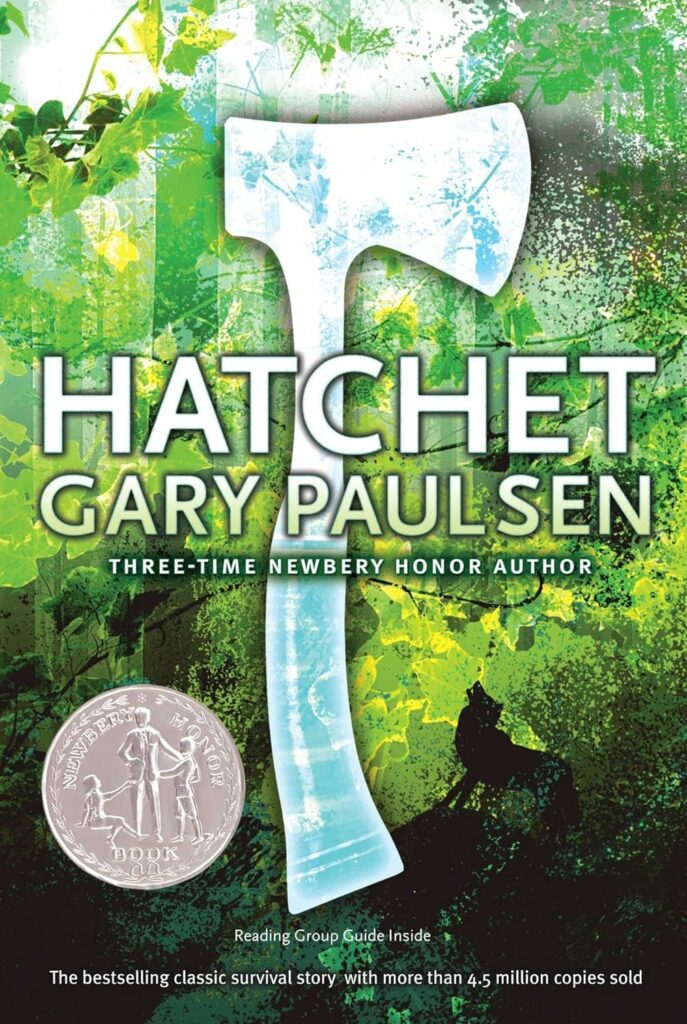
Photo: Amazon
Brian’s survival is not without its trials and tribulations. He endures a moose attack, a tornado that destroys his shelter, and the constant battle against hunger, injury, and the elements. Each challenge serves as a catalyst for growth, teaching Brian lessons in patience, humility, and the value of sheer willpower.
After fifty-four days in the wilderness, a turning point arrives when a plane lands on the lake, and Brian is rescued. He returns to civilization a changed person, carrying with him not just the physical scars of survival but a new perspective on life. His ordeal in the wilderness imparts a profound understanding of himself, his parents, and the complex nature of human emotions and relationships.
Related: All American Boys Summary and Characters
Hatchet Gary Paulsen Characters
In “Hatchet,” Gary Paulsen focuses primarily on the character of Brian Robeson, providing a deeply introspective view of his survival experience. However, a few other characters play crucial roles in shaping the story, albeit most of them from a distance or through Brian’s reflections. Here’s an overview of the characters:
- Brian Robeson: Brian, the protagonist, is a thirteen-year-old boy who finds himself stranded in the Canadian wilderness following a plane crash. The story centers on his survival ordeal, showcasing his emotional and physical growth. Brian’s character evolves significantly throughout the novel, developing skills and resilience that enable him to survive in isolation. His reflections on his family, particularly the secret of his mother’s affair, add depth to his character and influence his perceptions and decisions.
- The Pilot: The pilot of the single-engine plane flying Brian to visit his father plays a brief but pivotal role in the story. His sudden heart attack and subsequent death are the catalysts for Brian’s survival saga. Though unnamed, the pilot’s presence is a reminder of the abruptness of Brian’s transition from a regular teenager to a survivor.
- Brian’s Mother: Though not physically present in the wilderness, Brian’s mother is a significant character in his internal life. Her affair, which Brian accidentally discovers before the trip, haunts him and shapes his emotional state throughout the story. Her decision to give Brian the hatchet as a gift becomes crucial to his survival, making her an inadvertent contributor to his ordeal.
- Brian’s Father: Brian’s father, like his mother, is not physically present in the story but is a significant figure in Brian’s thoughts and motivations. He is the reason Brian is on the plane, as Brian is flying to visit him in the Canadian oil fields after his parents’ divorce. Brian’s reflections on his relationship with his father and their life before the divorce add layers to the narrative.
- The Rescue Pilot: The rescue pilot enters the story at the climax, marking the end of Brian’s survival journey. His arrival is unexpected and brings the story to its resolution, saving Brian from the wilderness and symbolizing his return to civilization and the end of his ordeal.

Hatchet Gary Paulsen Book Club Questions
Here are several questions that could lead to engaging and reflective conversations:
- Survival and Resilience: How do Brian’s survival skills evolve, and what key moments signify his transition from helplessness to self-reliance?
- The Role of Memory: How do Brian’s memories, especially the secret about his mother, impact his survival? Are they more of a distraction or a source of motivation?
- The Hatchet’s Symbolism: Discuss the symbolism of the hatchet and how its meaning evolves throughout the novel.
- Nature as a Character: How does Paulsen personify nature, and what roles does it play in the story?
- Isolation and Human Nature: How does Brian’s solitary existence affect his understanding of himself and his perspective on society and relationships?
- Themes of Adolescence: In what ways is Brian’s wilderness experience a metaphor for adolescence?
- The Ending: Were you satisfied with the ending? How do you imagine Brian’s adjustment back to civilization?
- If You Were Brian: What do you think would be your biggest challenge if stranded in the wilderness?
- Lessons Learned: What are the most important lessons Brian learns, and how do they relate to everyday challenges?
- Comparing Book and Adaptations: For those who have seen film adaptations, how do they compare to the book?
Related: Ruin And Rising Summary
Final thoughts
In wrapping up, I trust this brief overview has sparked your interest in “Hatchet” by Gary Paulsen. This novel is a profound journey of survival and self-discovery, wrapped in the thrilling package of a young adult adventure. For those yet to experience Brian Robeson’s unforgettable saga in the Canadian wilderness, I strongly encourage you to delve into this book.