
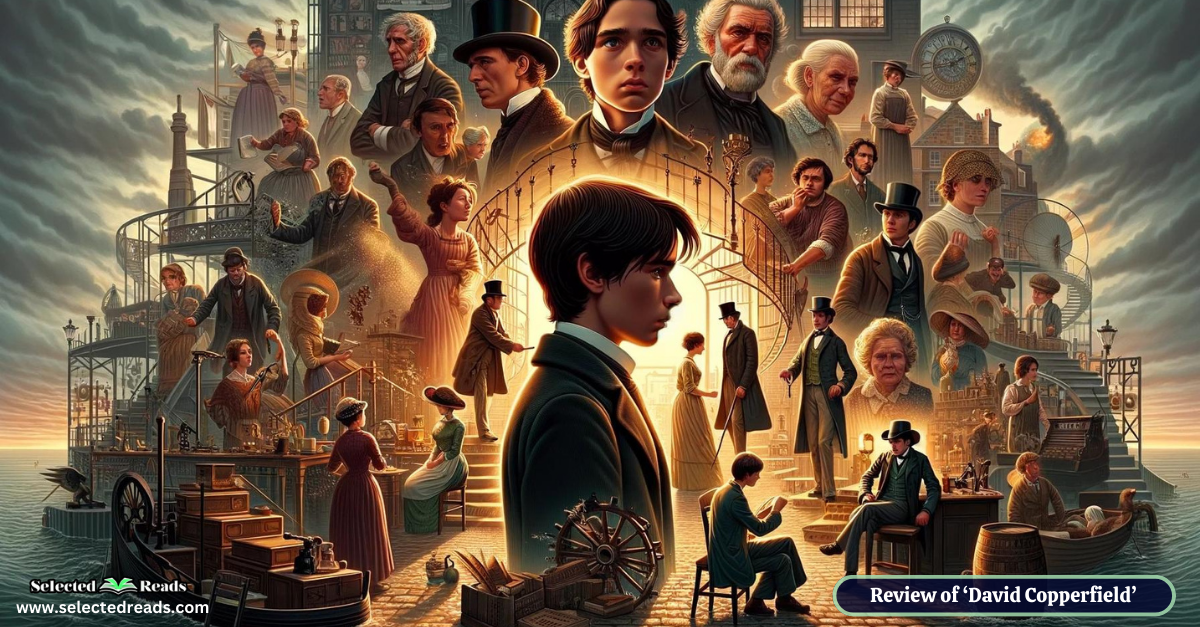
Today, we turn our attention to “David Copperfield” by Charles Dickens, a seminal work in classic literature. As a quintessential example of the Bildungsroman genre, this novel traces the journey of its protagonist from a tumultuous childhood to the realization of his vocation as a novelist.
This post aims to gently guide you through the intricacies and depths of “David Copperfield,” ensuring a clear understanding of its plot and characters without giving away any key revelations. Our exploration begins with a concise overview of the story, setting the stage for a deeper dive into the vibrant cast of characters Dickens masterfully creates. Finally, we’ll explore several engaging questions designed to enrich any book club discussion, prompting reflections on the themes, motivations, and transformations that make “David Copperfield” an enduring classic in literature.
David Copperfield Summary
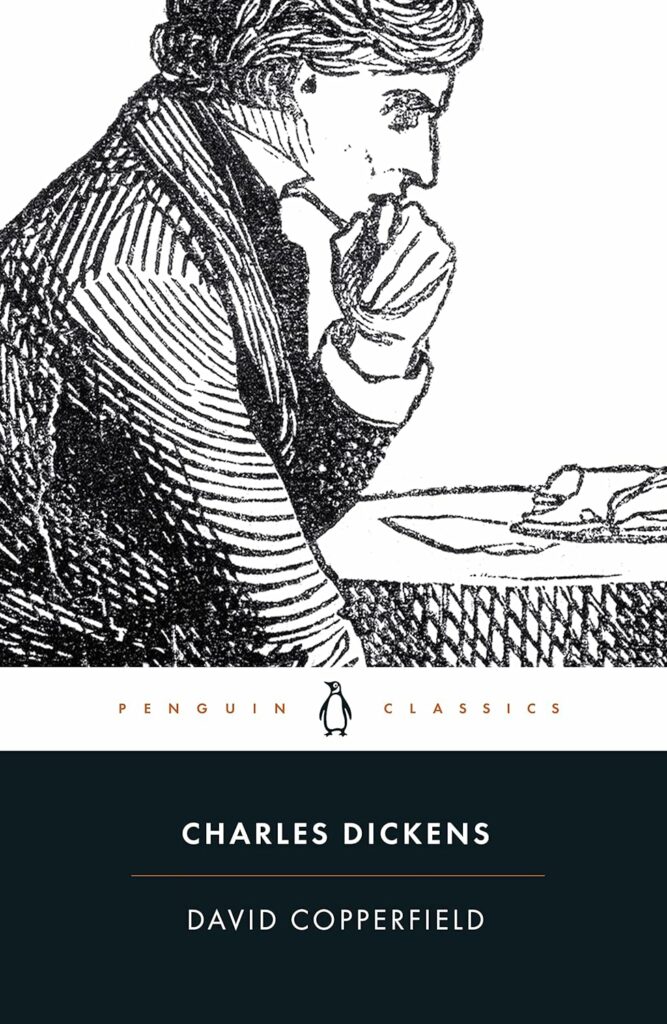
“David Copperfield,” written by the illustrious Charles Dickens and presented in this edition with insights from Jeremy Tambling, unfolds the journey of its titular character through a life filled with trials, transformations, and triumphs. Born to a widow, David’s early years are tender, but the bliss is short-lived following his mother’s remarriage to the severe Mr. Murdstone. His stepfather’s cruelty, coupled with a lack of empathy from his step-aunt, drives David to endure hardships at a young age, including being sent away to a grim boarding school and later toiling in a London factory.
The narrative arc of David’s life takes a turn with the passing of his mother, compelling him to escape the clutches of his oppressive work environment and seek out his eccentric, yet formidable, Aunt Betsey Trotwood. With her support, David embarks on a new chapter, pursuing education and forming significant relationships that shape his path. Among these acquaintances are the magnanimous Mr. Micawber, whose financial recklessness is matched only by his charisma, and the unctuous Uriah Heep, whose humble facade masks a conniving ambition.
David’s journey is not solely one of struggle; it is also a tapestry of his relationships. His friendship with the charismatic but flawed James Steerforth and the simple-hearted yet steadfast Tommy Traddles, alongside his romantic entanglements with the enchanting but frail Dora Spenlow and the intellectually matched Agnes Wickfield, offer glimpses into David’s evolving understanding of love, loyalty, and personal growth.
Central to David’s narrative is his aspiration to become a writer, a goal he achieves through perseverance and self-discovery. His life, rich in encounters ranging from the comedic to the tragic, mirrors Dickens’ own experiences, making the novel a semi-autobiographical exploration of memory, identity, and the human condition.
Related: The Great Gatsby Summary
David Copperfield Characters
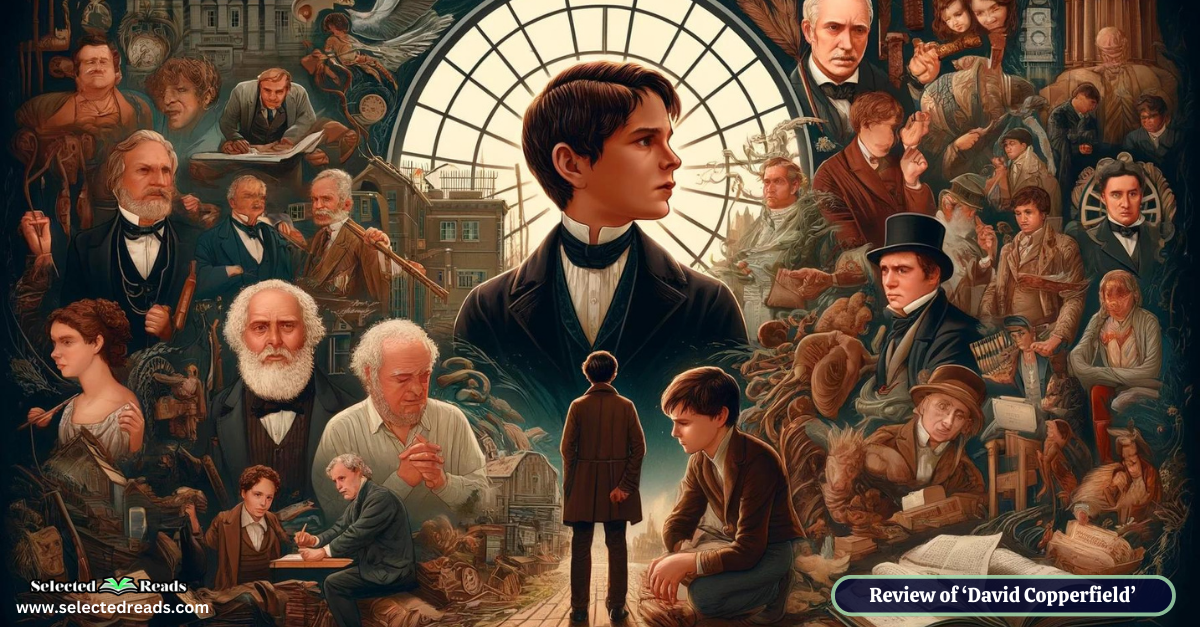
“David Copperfield” by Charles Dickens is a novel brimming with a rich tapestry of characters, each vividly brought to life through their interactions with the protagonist and the society of Victorian England. Here’s a closer look at some of the key characters:
- David Copperfield: The protagonist, whose life story from an impoverished and unhappy childhood to becoming a successful author, forms the spine of the narrative. David’s experiences, relationships, and personal growth reflect Dickens’ own life, making David a complex, relatable, and deeply human character.
- Clara Copperfield: David’s gentle and loving mother, whose remarriage to Mr. Murdstone marks the beginning of David’s troubles. She is characterized by her affection for David and her vulnerability in the face of her domineering second husband.
- Mr. Edward Murdstone: David’s cruel stepfather, a harsh and unfeeling man who imposes strict discipline on David and his mother, contributing significantly to their misery. His influence drives much of the early conflict in David’s life.
- Aunt Betsey Trotwood: David’s eccentric and strong-willed great aunt, who becomes his guardian and protector. Her initial disapproval of David (at his birth) turns into a deep affection, and she plays a crucial role in shaping his future.
- Agnes Wickfield: The daughter of Mr. Wickfield, Agnes is wise, patient, and kind-hearted. She becomes David’s confidante and later, his second wife. Agnes represents the ideal woman in Dickens’ eyes, embodying virtue and moral integrity.
- Uriah Heep: A sly and obsequious clerk who works for Mr. Wickfield, Heep’s outward humility masks a manipulative and ambitious nature. He represents one of Dickens’ most memorable villains, embodying hypocrisy and greed.
- James Steerforth: David’s school friend who is charming and charismatic but ultimately flawed. Steerforth’s reckless and manipulative behavior leads to tragic consequences, illustrating the dangers of unchecked privilege and moral ambiguity.
- Wilkins Micawber: A lovable and eternally optimistic gentleman who is perpetually in debt. Micawber’s famous assertion that “something will turn up” reflects his unwavering hope despite his financial imprudence. He is a source of comic relief as well as a figure of genuine affection in David’s life.
- Dora Spenlow: David’s first love and wife, who is beautiful and childlike. Dora’s fragility and inability to cope with adult responsibilities highlight the limitations of an idealized, romantic love in the face of real-world challenges.
- Tommy Traddles: Another of David’s school friends, Traddles is kind, loyal, and resilient. Despite his own struggles, he maintains a positive outlook and ultimately achieves a modest but happy life.
David Copperfield Book Club Questions
Here are some thought-provoking questions that can help guide your book club’s discussion:
- Character Growth: How does David Copperfield’s character develop throughout the novel? Consider the influences of his hardships, relationships, and successes on his personal growth.
- Themes of Social Class: “David Copperfield” explores various aspects of social class and mobility. How do characters like Uriah Heep and Mr. Micawber reflect Dickens’ views on society and class struggles?
- Influence of Autobiography: Knowing that “David Copperfield” is considered to be somewhat autobiographical, how do you think Charles Dickens’ own life experiences are reflected in the novel? Do you think this adds to the authenticity of David’s character and his journey?
- Role of Women: Examine the roles of women in the novel, particularly focusing on characters like Agnes Wickfield, Dora Spenlow, and Betsey Trotwood. How are their strengths and weaknesses portrayed, and what does that say about Dickens’ perspectives on women?
- Villains and Morality: Discuss the portrayal of morality through the novel’s villains, such as Uriah Heep and Mr. Murdstone. What makes them effective as antagonists, and how do they contribute to the novel’s moral landscape?
- Symbolism and Motifs: What symbols or motifs do you find recurrent throughout “David Copperfield”? For example, consider the significance of names, locations (like the Yarmouth beach), or objects (like the Micawber’s punch bowl). How do these elements contribute to the themes of the novel?
- The Concept of Home and Family: How does Dickens explore the idea of home and family? Consider the various forms of familial and domestic arrangements presented in the novel. What seems to be valued or criticized in these different models?
- Comedy and Tragedy: “David Copperfield” blends elements of comedy and tragedy. Discuss how Dickens uses these elements to enhance the narrative. Are there any moments where these genres seem to intersect?
- Legacy and Memory: The novel places a strong emphasis on the power of memory and the act of writing as a means to capture life’s experiences. How does David’s perspective on his past change over time, and how does this affect his narrative?
- Character Connections: Choose a secondary character such as Mr. Micawber, Emily, or Tommy Traddles. Discuss how their story arcs and personal journeys add depth to the main narrative. What do these characters reveal about the larger themes of the novel?
Final thoughts
In wrapping up, I trust this brief exploration has sparked your interest in “David Copperfield” by Charles Dickens. This novel stands as a monumental work, showcasing the journey of its eponymous character through the trials and triumphs of life. If “David Copperfield” isn’t yet among the books you’ve journeyed through, I wholeheartedly encourage you to check it out.