
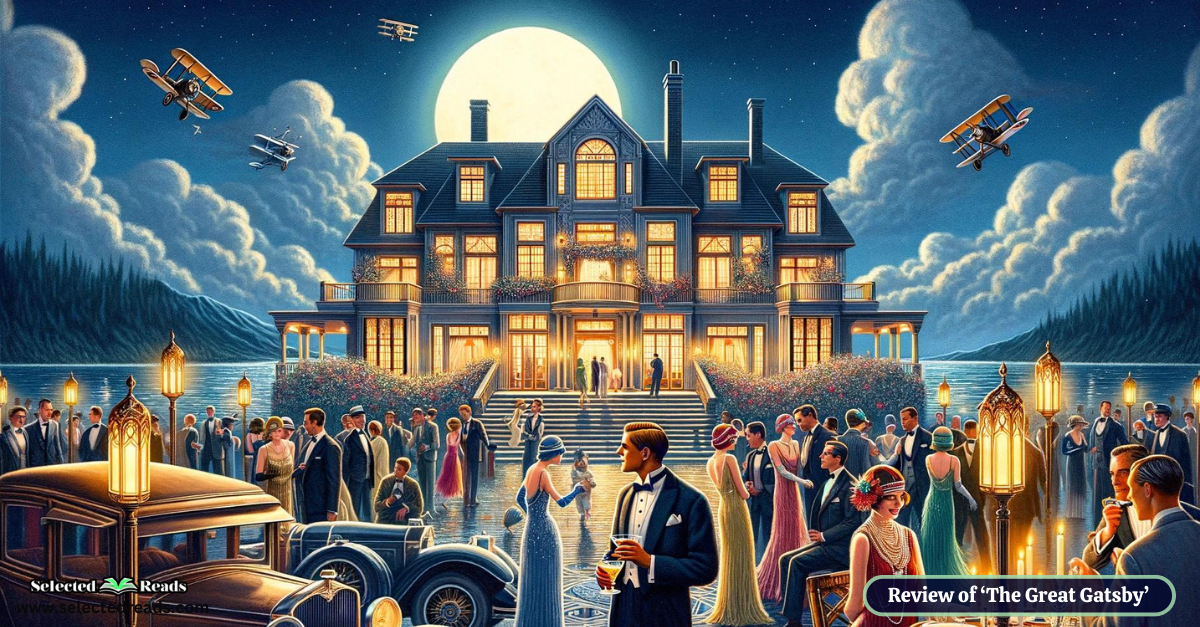
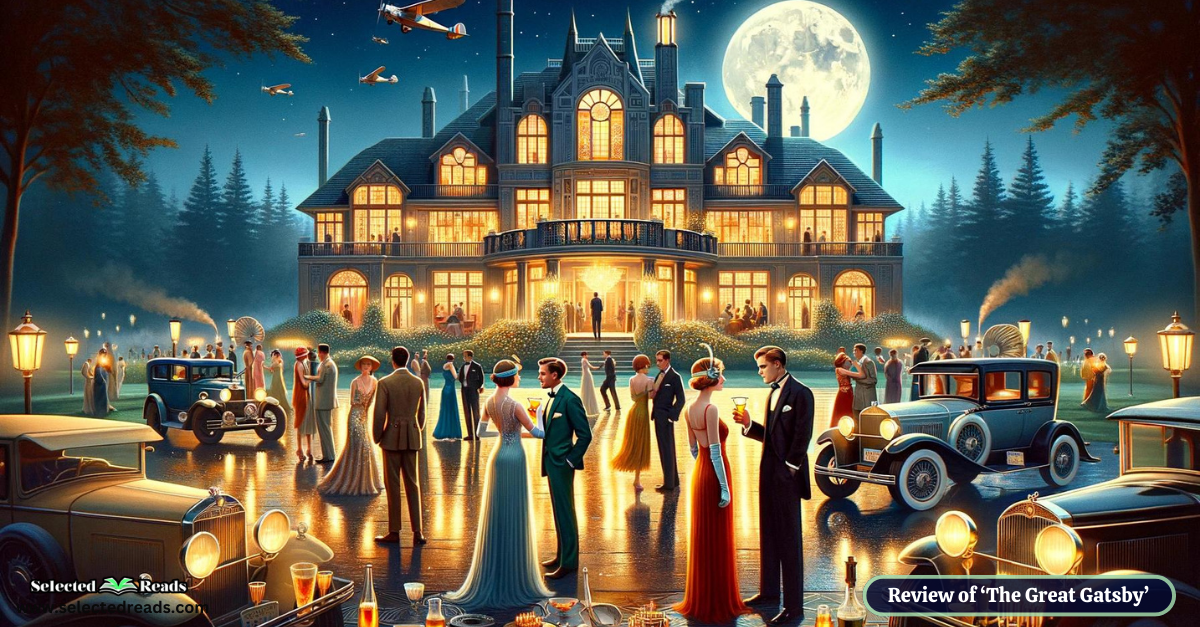
“The Great Gatsby” by F. Scott Fitzgerald is the focus of our post today. This quintessential novel, a masterpiece belonging to the genre of classic American literature, captures the essence of the Jazz Age like no other. The purpose of this post is to familiarize you with the intricate layers of Fitzgerald’s narrative without spoiling the beauty of discovering its depths firsthand.
My discussion will proceed as follows: First, I provide an extended summary of the novel, delving into the opulent yet tragic world of Jay Gatsby and his relentless pursuit of the American Dream. Next, I discuss the characters that populate this rich narrative landscape, each embodying the complexities and contradictions of the Roaring Twenties.
To wrap up, I’ll offer some thought-provoking book club questions designed to engage and inspire deeper reflection on Fitzgerald’s enduring masterpiece, encouraging a lively and enriching discussion about its themes, symbolism, and relevance to our own times.
Related: The Great Gatsby Themes
The Great Gatsby Summary
The story follows the enigmatic Jay Gatsby, a man of immense wealth and ambition, whose life is defined by his unyielding love for the beautiful Daisy Buchanan. Nick Carraway, a Yale graduate from the Midwest and a World War I veteran, moves to West Egg, Long Island, seeking a new start in the bond business. He rents a modest house adjacent to the lavish mansion of Jay Gatsby, a mysterious millionaire known for hosting extravagant parties. Despite their proximity, Nick initially knows little about his enigmatic neighbor.
The story unfolds as Nick is drawn into the upper-class society of East Egg, where his cousin Daisy lives with her husband, Tom Buchanan. Through their interactions, Nick learns of Tom’s affair with Myrtle Wilson, which starkly contrasts with the Buchanans’ outward appearance of marital stability. As Nick becomes more entangled in their lives, he is invited to one of Gatsby’s grandiose parties, where he finally meets Gatsby and begins to uncover the complexities of his character.
Gatsby, a man of profound ambition and hidden depths, is revealed to be deeply in love with Daisy. His wealth and parties are all part of an elaborate attempt to attract her attention and win her love. Gatsby and Daisy had a romantic relationship before he went to fight in the war and before she married Tom. Gatsby’s dream is to reunite with Daisy and rekindle their past love.
As the story progresses, Gatsby and Daisy rekindle their relationship, though their affair is fraught with tension and the impossibility of recapturing the past. The climax of the novel occurs when Gatsby and Tom confront each other over Daisy, leading to a series of tragic events. Daisy accidentally hits and kills Myrtle Wilson with Gatsby’s car, though Gatsby takes the blame. This incident sets off a chain reaction, culminating in Gatsby’s tragic death at the hands of Myrtle’s grieving husband, George Wilson, who mistakenly believes Gatsby was both Myrtle’s lover and her killer.
In the aftermath, Nick, disillusioned with the East Egg society and the moral decay he has witnessed, decides to return to the Midwest. He reflects on Gatsby’s indomitable spirit, his relentless pursuit of a dream that was ultimately unattainable, and the high cost of his aspirations.
Related: Best Classic Children’s Books
The Great Gatsby Characters
In “The Great Gatsby,” F. Scott Fitzgerald presents a cast of complex characters, each embodying different aspects of ambition, disillusionment, and the pursuit of the American Dream during the Jazz Age. Here’s a closer look at the main characters:
- Jay Gatsby: The titular character, Jay Gatsby is a wealthy and enigmatic man who throws extravagant parties in hopes of attracting Daisy Buchanan, whom he loved before the war. His life is a testament to the power of the American Dream and its limitations, showcasing his rise from poverty to immense wealth through dubious means, all for the love of Daisy.
- Daisy Buchanan: Daisy is Nick Carraway’s cousin and the object of Gatsby’s affection. Married to Tom Buchanan, Daisy is beautiful and charming, yet ultimately shallow and self-centered. Her love affair with Gatsby rekindles but doesn’t survive the societal expectations and personal dilemmas she faces.
- Tom Buchanan: Daisy’s husband, Tom is a wealthy, arrogant, and aggressive man who embodies the moral decay of the upper class. His affair with Myrtle Wilson and his sense of entitlement reveal the darker aspects of the American aristocracy.
- Nick Carraway: The narrator of the story, Nick is a young man from the Midwest who moves to New York to work in the bond business. Renting a house next to Gatsby’s mansion, Nick becomes entwined in the lives of the rich and witnesses the tragic consequences of their excesses and illusions. He serves as both a participant and a critical observer of the story, offering insights into the characters and events that unfold.
- Jordan Baker: A professional golfer and Daisy’s friend, Jordan represents the modern woman of the 1920s—cynical, self-sufficient, and somewhat dishonest. She becomes romantically involved with Nick, though their relationship ultimately fizzles due to Nick’s disillusionment with the world he has been drawn into.
- Myrtle Wilson: Tom Buchanan’s mistress, Myrtle is married to George Wilson and lives in the valley of ashes, a stark contrast to the glitz of East Egg and West Egg. Her tragic death by a hit-and-run accident (with Daisy at the wheel of Gatsby’s car) sets off the chain of events leading to the climax of the novel.
- George Wilson: Myrtle’s husband, George is a mechanic who owns a run-down garage in the valley of ashes. Devastated by Myrtle’s affair and death, he seeks revenge, leading to the dramatic and fatal conclusion.
The Great Gatsby Book Club Questions
Here are some thought-provoking questions to get your book club conversation started:
- Gatsby’s American Dream: Jay Gatsby’s pursuit of the American Dream is central to the novel. What do you think the green light at the end of Daisy’s dock symbolizes for Gatsby? Is his version of the American Dream attainable, or is it inherently flawed?
- Character Flaws and Sympathies: Each character in “The Great Gatsby” is deeply flawed, yet some readers may find themselves sympathizing with certain characters more than others. Which character did you find most sympathetic, and why? Conversely, which character did you find least sympathetic, and what about them influenced your opinion?
- Daisy Buchanan’s Role: Daisy often comes under criticism for her actions and her indecisiveness between Tom and Gatsby. Do you view Daisy as a victim of her social environment and the times, or do you think she had more agency than she exercised? How does Fitzgerald portray her character in relation to the novel’s themes?
- The Setting as a Character: Fitzgerald meticulously sets the stage with East Egg, West Egg, and the Valley of Ashes representing different aspects of American society. How do these settings contribute to our understanding of the characters and their motivations? Can the settings be considered a character in their own right?
- Symbols and Motifs: Fitzgerald uses several recurring symbols and motifs throughout the novel, such as the eyes of Doctor T.J. Eckleburg, the green light, and the valley of ashes. Choose one and discuss its significance and how it contributes to the overall theme of the novel.
- The Role of Nick Carraway: As the narrator, Nick Carraway presents a unique perspective on the events of the novel. How reliable do you find Nick as a narrator? How does his relationship with the other characters influence the story, and what might Fitzgerald be suggesting about the nature of storytelling and perception?
- The Jazz Age and Moral Decay: The novel is often seen as a critique of the Jazz Age and its excesses. How do the characters’ actions reflect the moral decay of society during this period? Do you think Fitzgerald romanticizes this era despite critiquing it?
- The Ending: The novel’s ending is both tragic and reflective, with Nick returning to the Midwest disillusioned. What are your thoughts on the conclusion of the story? Does it offer any sense of justice or resolution for the characters? What do you think Fitzgerald is trying to convey about the American Dream and the values of society?
- Fitzgerald’s Writing Style: How does Fitzgerald’s writing style contribute to the mood and themes of “The Great Gatsby”? Are there any passages or descriptions that stood out to you for their beauty, insight, or impact?
- Relevance Today: Considering “The Great Gatsby” was published in 1925, in what ways do you think the novel is still relevant today? Can you draw any parallels between the society Fitzgerald describes and today’s world?
Related: Some of The Best Classic Adventure Books of All Time
Final thoughts
To conclude, I hope that you have found this short review of “The Great Gatsby” interesting and enlightening. F. Scott Fitzgerald’s magnum opus is a brilliant exploration of desire, disillusionment, and the elusive nature of the American Dream, set against the backdrop of the Jazz Age’s opulence and excess. If you have not already delved into this masterpiece, I highly recommend that you do so.