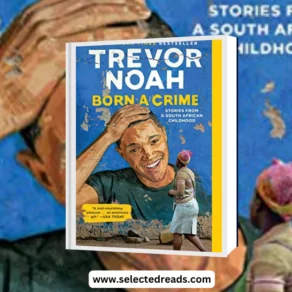

In his profoundly insightful memoir, “Born a Crime,” Trevor Noah takes us on a remarkable journey through his childhood and adolescence in post-apartheid South Africa. His narrative, rich with humor and emotion, delves into the complexities of navigating a life where one’s very existence is considered an act of rebellion against the societal norms of the time. Noah’s storytelling brings to life the vivid contrasts of a world where disparity and resilience go hand in hand.
For those of you who want to delve deeper into Noah’s life and the essence of his experiences, I invite you to read my extended summary of Born a Crime . It’s a treasure trove of insights and reflections that will enrich your understanding of not just the book, but of life’s multifaceted nature.
This post, however, serves a different purpose. Here, I want to share with you some thought-provoking quotes from “Born a Crime.” These snippets of wisdom, humor, and truth shine a light on the profound observations Noah makes about life, society, and the human spirit.
Each quote is a reflection of his unique perspective, shaped by a life of extraordinary circumstances. As you read these quotes, I encourage you to ponder the depth of their meaning and the universality of the experiences they depict.
Related: Born A Crime Book Club Questions
Born A Crime Quotes
Here are some of the best quotes from Trevor Noah’s Born a Crime:
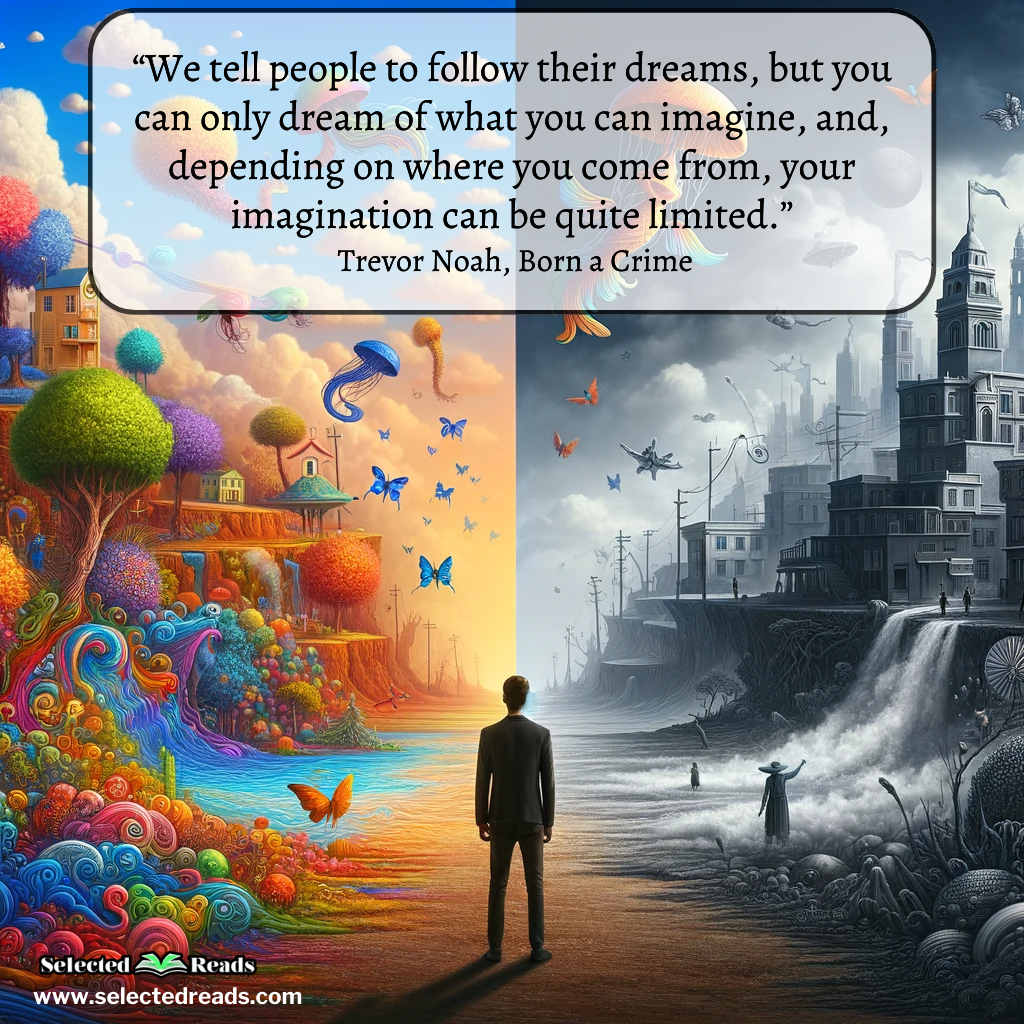
1. “We tell people to follow their dreams, but you can only dream of what you can imagine, and, depending on where you come from, your imagination can be quite limited.” ― Trevor Noah, Born a Crime
2. “People love to say, “Give a man a fish, and he’ll eat for a day. Teach a man to fish, and he’ll eat for a lifetime.” What they don’t say is, “And it would be nice if you gave him a fishing rod.” That’s the part of the analogy that’s missing.” ― Trevor Noah, Born a Crime
3. “If you’re Native American and you pray to the wolves, you’re a savage. If you’re African and you pray to your ancestors, you’re a primitive. But when white people pray to a guy who turns water into wine, well, that’s just common sense.” ― Trevor Noah, Born a Crime
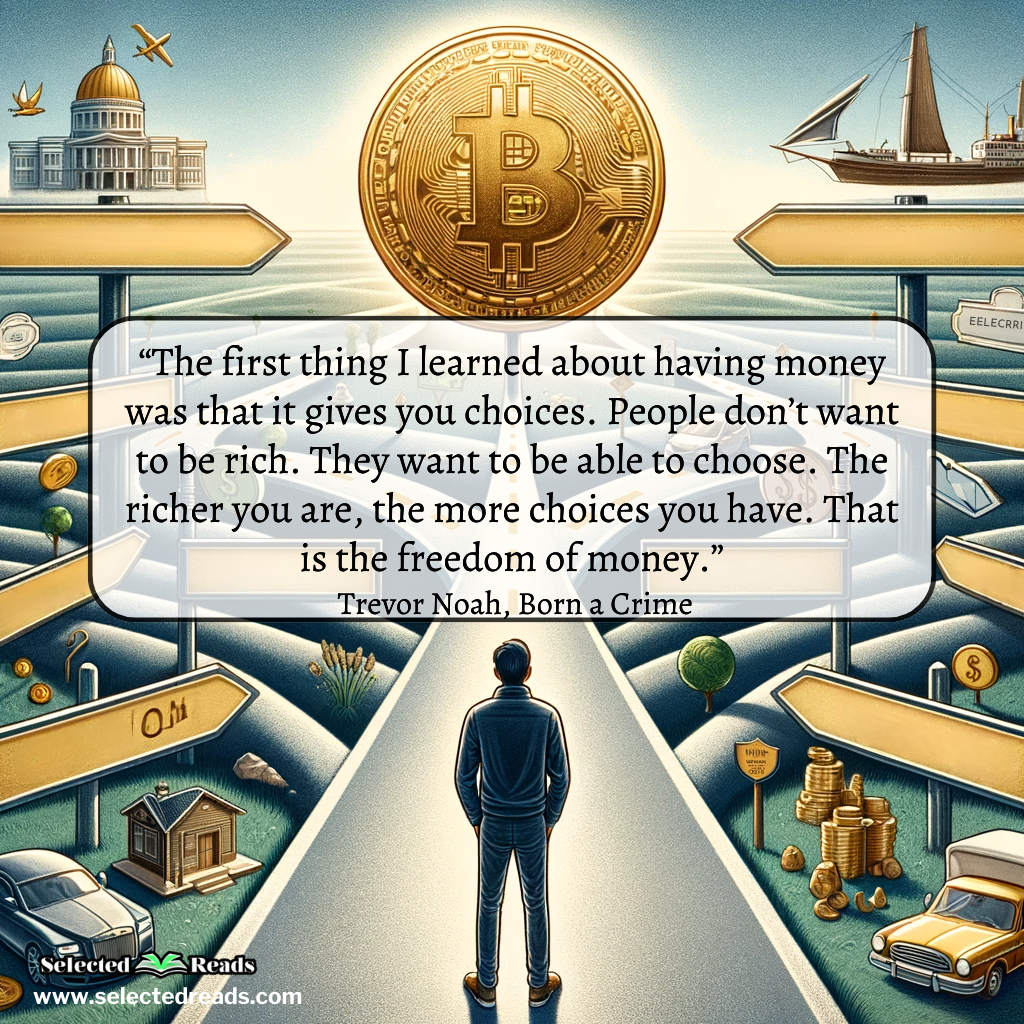
4. “The first thing I learned about having money was that it gives you choices. People don’t want to be rich. They want to be able to choose. The richer you are, the more choices you have. That is the freedom of money.” ― Trevor Noah, Born a Crime
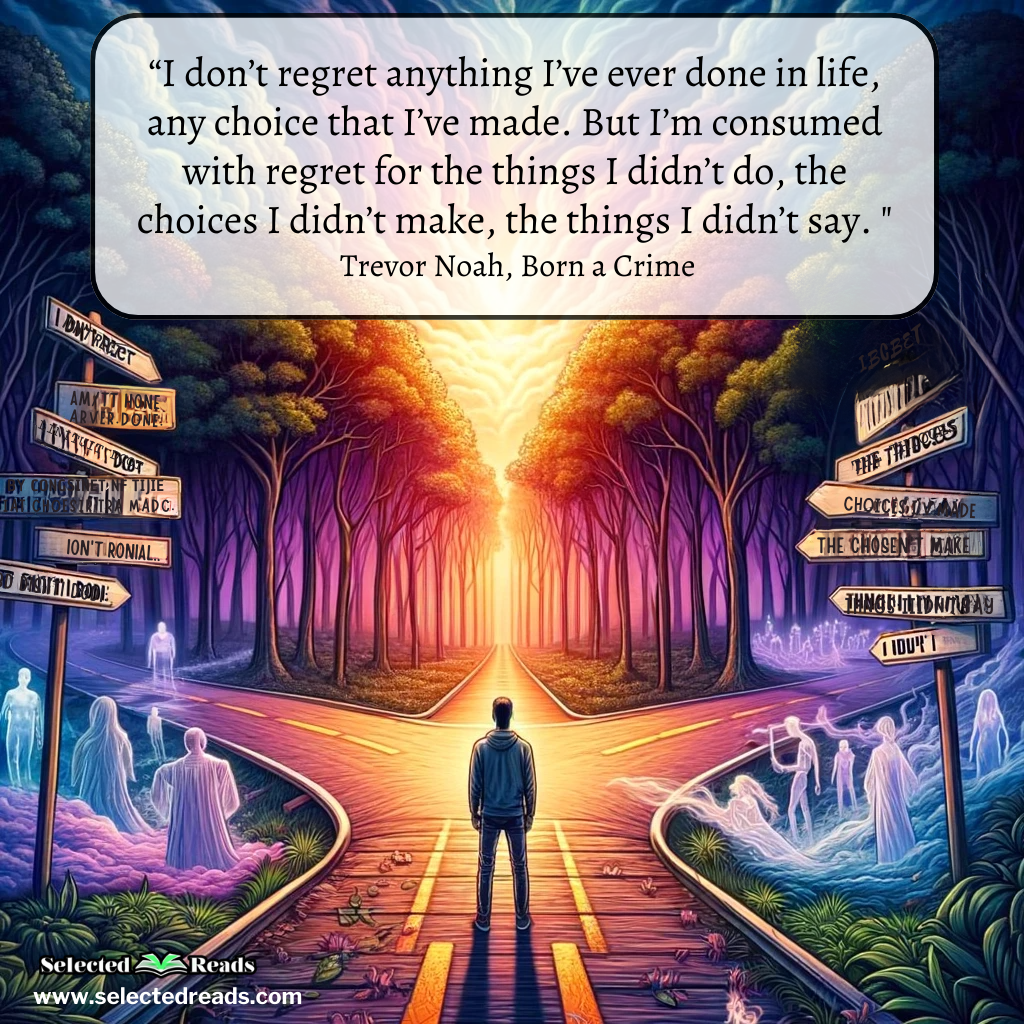
5. “I don’t regret anything I’ve ever done in life, any choice that I’ve made. But I’m consumed with regret for the things I didn’t do, the choices I didn’t make, the things I didn’t say. We spend so much time being afraid of failure, afraid of rejection. But regret is the thing we should fear most. Failure is an answer. Rejection is an answer. Regret is an eternal question you will never have the answer to.” ― Trevor Noah, Born a Crime
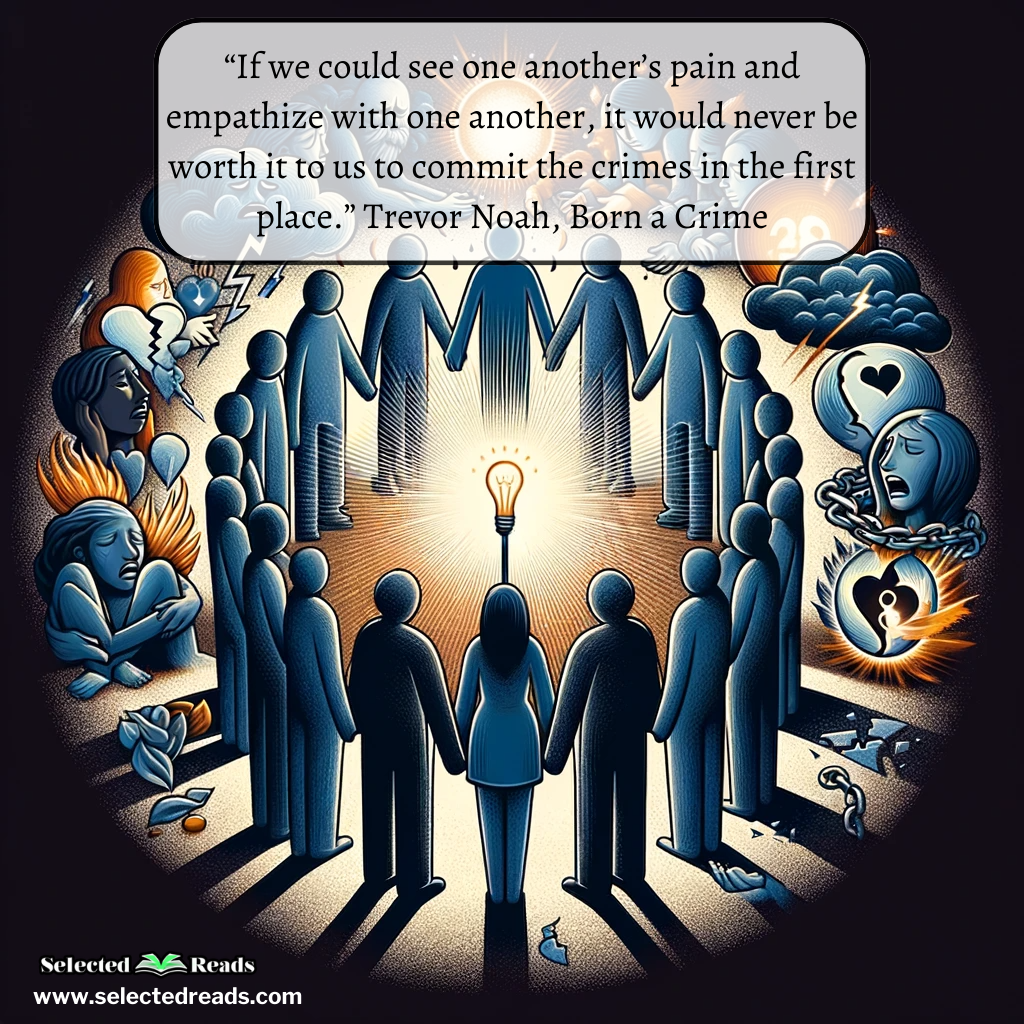
6. “We live in a world where we don’t see the ramifications of what we do to others because we don’t live with them. It would be a whole lot harder for an investment banker to rip off people with subprime mortgages if he actually had to live with the people he was ripping off. If we could see one another’s pain and empathize with one another, it would never be worth it to us to commit the crimes in the first place.” ― Trevor Noah, Born a Crime
7. “Nelson Mandela once said, ‘If you talk to a man in a language he understands, that goes to his head. If you talk to him in his language, that goes to his heart.’ He was so right. When you make the effort to speak someone else’s language, even if it’s just basic phrases here and there, you are saying to them, ‘I understand that you have a culture and identity that exists beyond me. I see you as a human being” ― Trevor Noah, Born a Crime
8. “Language, even more than color, defines who you are to people.” ― Trevor Noah, Born a Crime
9. “But the real world doesn’t go away. Racism exists. People are getting hurt. And just because it’s not happening to you, doesn’t mean it’s not happening. And at some point you have to choose; black or white, pick a side. You can try to hide from it. You can say, oh I don’t take sides, but at some point, life will force you to pick a side.” ― Trevor Noah, Born a Crime
10. “I was blessed with another trait I inherited from my mother, her ability to forget the pain in life. I remember the thing that caused the trauma, but I don’t hold onto the trauma. I never let the memory of something painful prevent me from trying something new.” ― Trevor Noah, Born a Crime
11. “Relationships are built in the silences. You spend time with people, you observe them and interact with them, and you come to know them—and that is what apartheid stole from us: time.” ― Trevor Noah, Born a Crime
12. “Comfort can be dangerous. Comfort provides a floor but also a ceiling.” ― Trevor Noah, Born a Crime

13. “Learn from your past and be better because of your past,” she would say, “but don’t cry about your past. Life is full of pain. Let the pain sharpen you, but don’t hold on to it. Don’t be bitter.” ― Trevor Noah, Born a Crime
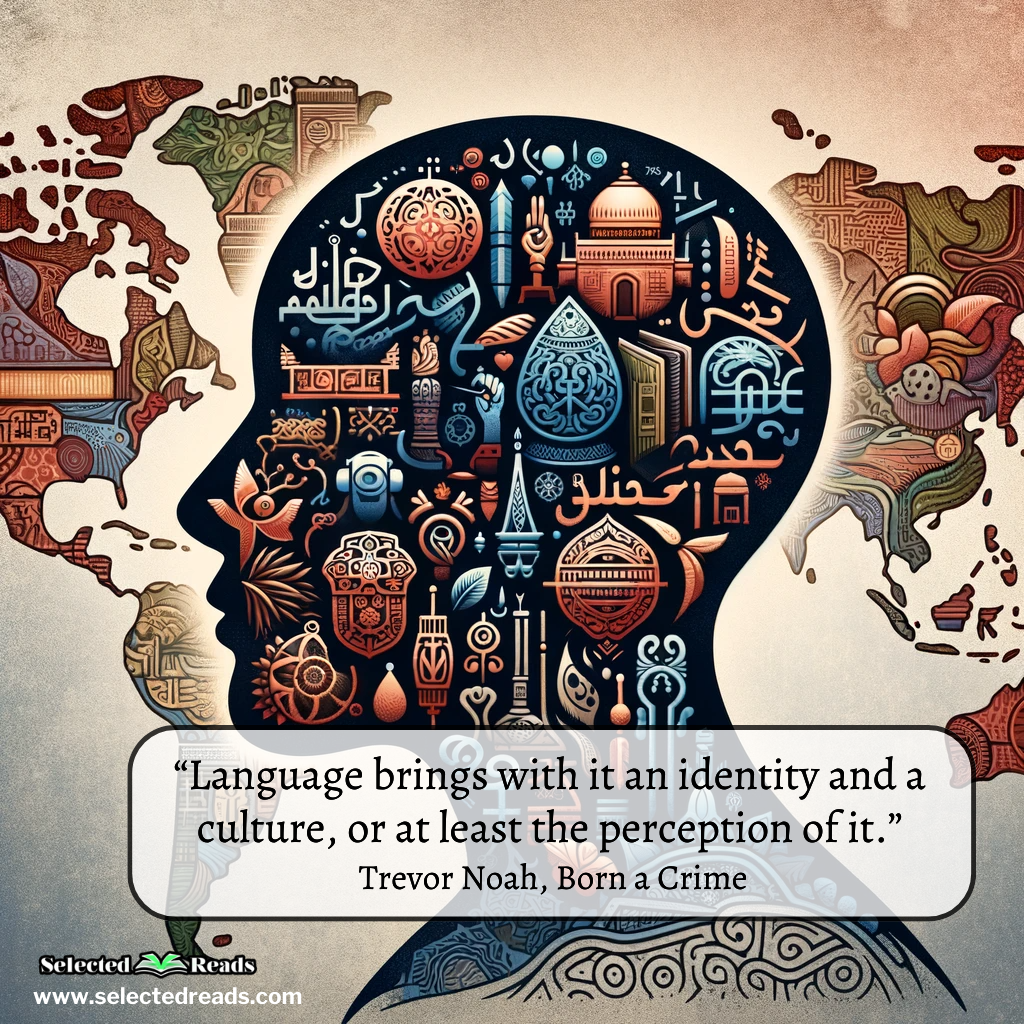
14. “Language brings with it an identity and a culture, or at least the perception of it. A shared language says “We’re the same.” A language barrier says “We’re different.” ― Trevor Noah, Born a Crime
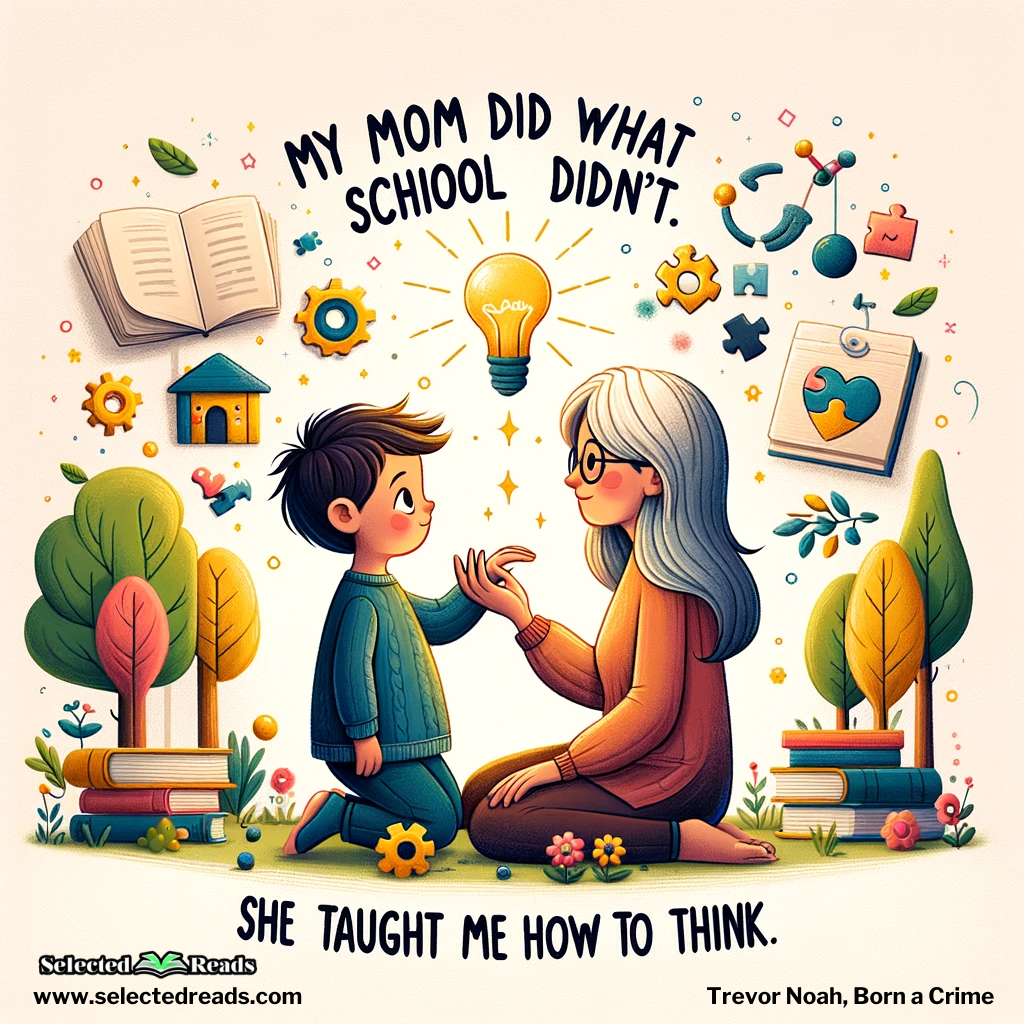
15. “My mom did what school didn’t. She taught me how to think.” ― Trevor Noah, Born a Crime
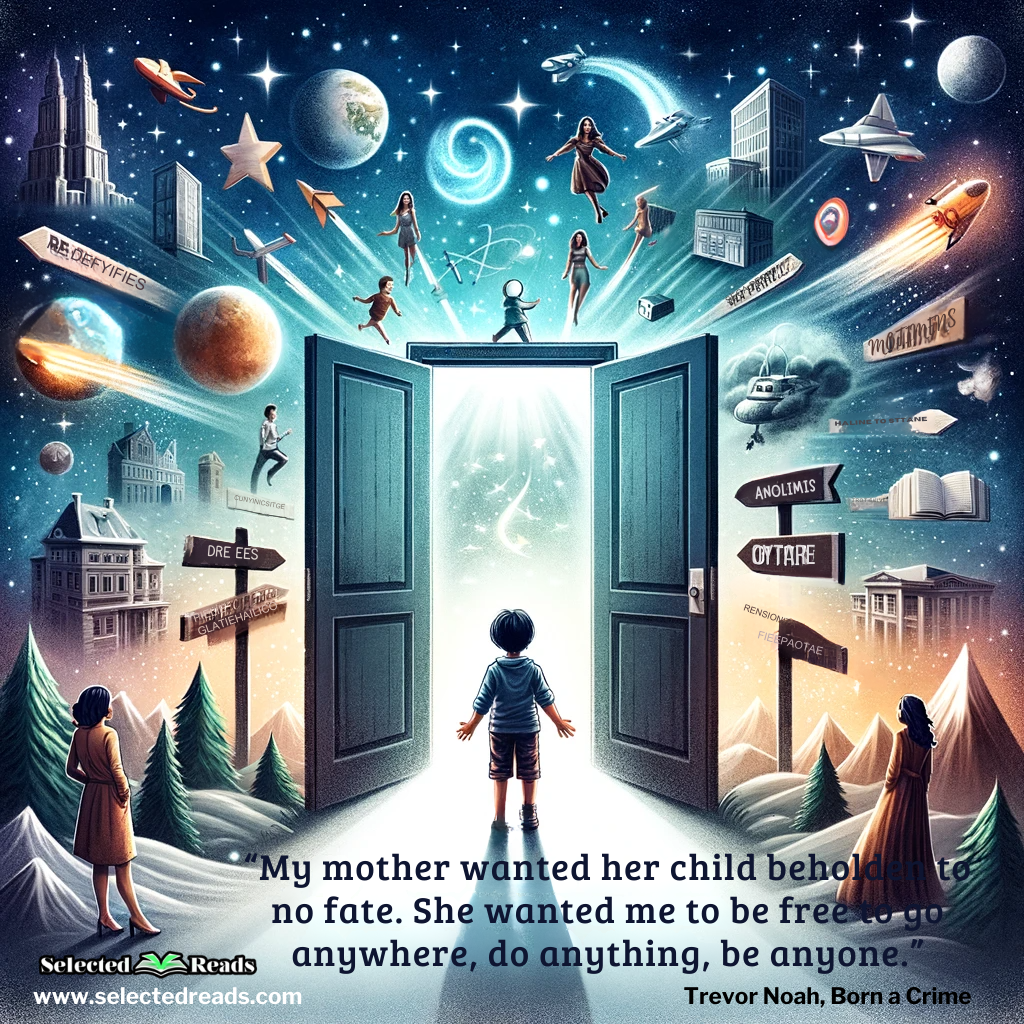
16. “When it was time to pick my name, she chose Trevor, a name with no meaning whatsoever in South Africa, no precedent in my family It’s not even a Biblical name. “It’s just a name,” he explains. “My mother wanted her child beholden to no fate. She wanted me to be free to go anywhere, do anything, be anyone.” ― Trevor Noah
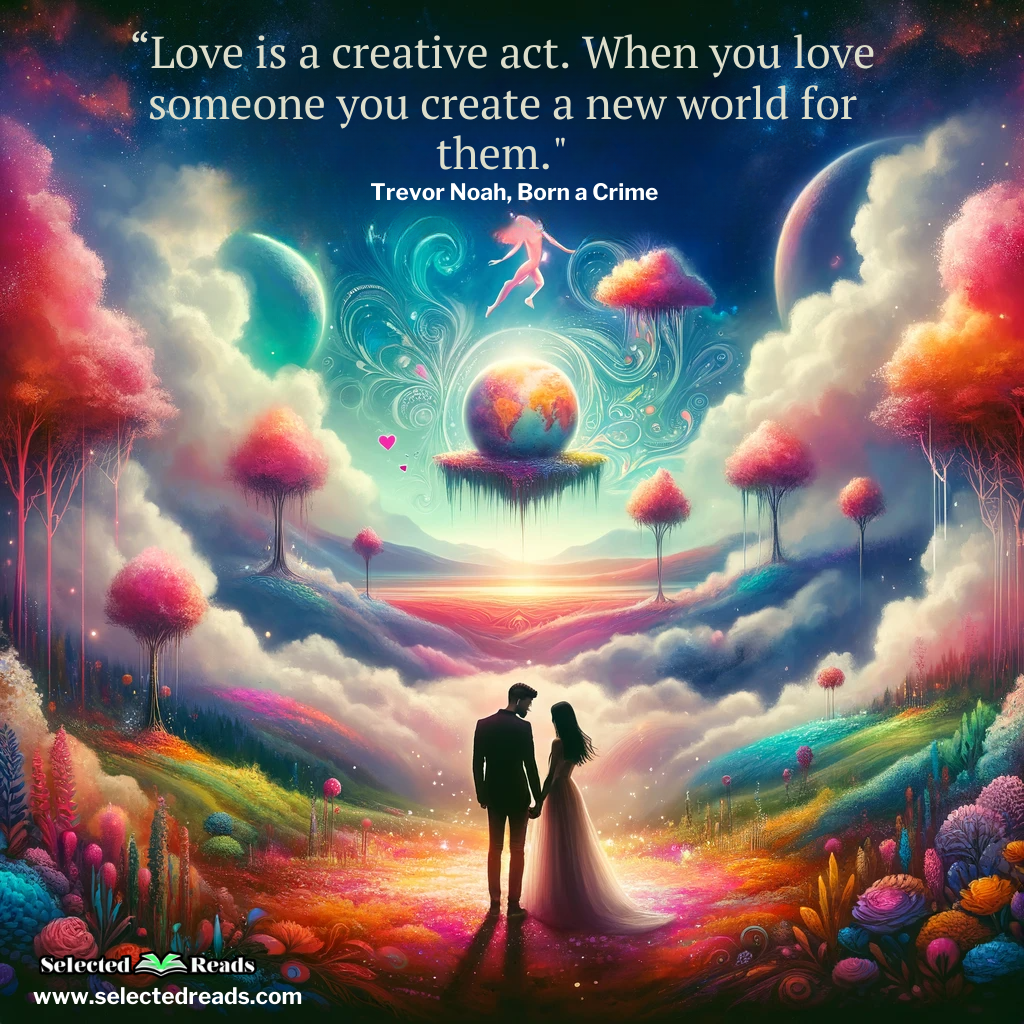
17. “Love is a creative act. When you love someone you create a new world for them. My mother did that for me, and with the progress I made and the things I learned, I came back and created a new world and a new understanding for her.” ― Trevor Noah, Born a Crime
Related: Best of The Hitchhiker’s Guide to the Galaxy Quotes
Final thoughts
Trevor Noah’s memoir “Born a Crime” is a profound commentary on society, identity, and the human condition. The quotes we’ve explored are not just excerpts from a story; they are windows into the depths of a life lived at the intersection of extreme adversity and immense resilience. Noah’s words remind us that our experiences, as unique as they are, echo universal truths about courage, pain, love, and the quest for freedom.
Each quote carries with it a weight of wisdom and a spark of inspiration. They challenge us to reflect on our own perceptions, to question the norms we often take for granted, and to appreciate the power of language, love, and self-determination in shaping our destinies. Noah’s journey, marked by both hardship and humor, reminds us of the incredible strength that lies within the human spirit to overcome, to adapt, and to thrive despite the odds.