
Today’s post delves into “Rules” by Cynthia Lord, a touching narrative that falls within the realm of young adult fiction. This Newbery Honor-winning novel explores the complexities of familial relationships, acceptance, and the broad spectrum of what is considered normal. The aim of this discussion is to provide you with a comprehensive overview of the story and its characters, all while preserving the core surprises and developments for your own reading.
Our exploration will unfold in three parts: initially, I’ll provide an extended summary of the novel to set the stage. Following that, we’ll take a closer look at the main characters and their roles within the story. To conclude, I’ll pose some thought-provoking questions perfect for book club discussions or personal contemplation.
Rules by Cynthia Lord Summary
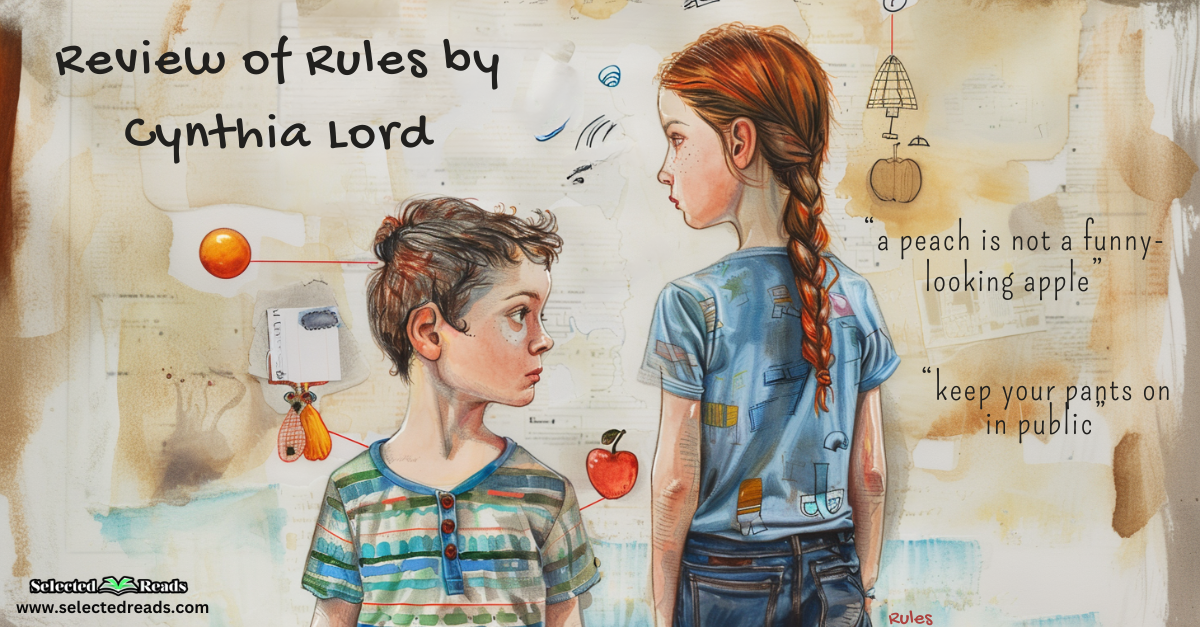
“Rules” by Cynthia Lord centers around Catherine, a twelve-year-old girl who craves a semblance of normalcy in her life, a challenge given her family circumstances. Catherine’s younger brother, David, has autism, which significantly shapes their family dynamics and Catherine’s day-to-day life. Throughout the story, Catherine is depicted diligently trying to help David understand the world around him by creating a list of rules.
These rules range from simple corrections like “a peach is not a funny-looking apple” to more socially critical ones such as “keep your pants on in public.” Her intention is to prevent the kind of behaviors in David that might draw public embarrassment.
The narrative unfolds over the course of a summer that brings significant changes to Catherine’s world. She meets two new people who play pivotal roles in her life: Jason, a nonverbal paraplegic who communicates through words on cards, and Kristi, the new girl next door whom Catherine hopes to befriend. Jason’s introduction into Catherine’s life comes as she begins to volunteer at the clinic where he receives treatment.

Photo: Amazon
Their friendship develops as Catherine starts creating cards with new words for Jason, helping him expand his means of communication. This connection challenges Catherine’s notions of what is normal and opens her heart to the complexities of human relationships.
Meanwhile, Catherine aims to foster a friendship with Kristi, whose apparent normalcy and acceptance Catherine envies. However, her efforts are complicated by her fear of how Kristi will perceive David. This leads to tension and misunderstandings, highlighting Catherine’s internal conflict between her desire for a normal life and the reality of her responsibilities to her brother.
The climax of the story occurs when Catherine’s carefully separated worlds collide during a community dance. Here, she must confront her own biases and fears about normalcy and acceptance. She grapples with feelings of shame, loyalty, and love, ultimately realizing that her perception of normal isn’t the only one that matters.
“Rules” is a story about growth, understanding, and acceptance, providing a nuanced look at the lives of families dealing with disabilities and the eternal quest for normalcy amidst life’s inherent chaos. Through her interactions with David, Jason, and Kristi, Catherine learns important lessons about friendship, acceptance, and the arbitrary nature of the rules we live by.
Rules by Cynthia Lord Characters
In “Rules” by Cynthia Lord, the main characters are intricately developed, each contributing uniquely to the thematic fabric of the story. Here’s a closer look at the primary characters:
- Catherine: The protagonist of the story, Catherine is a twelve-year-old girl struggling to balance her desire for a normal life with the realities of having a brother with autism. She is thoughtful, creative, and often torn between caring for her brother and seeking her own identity outside her family responsibilities.
- David: Catherine’s younger brother, who has autism. His condition heavily influences the family dynamics. David is portrayed as someone with specific needs and behaviors that Catherine tries to manage through her list of rules. His character brings out the themes of empathy and understanding in the narrative.
- Mom and Dad: Catherine and David’s parents are supportive but clearly focused on meeting David’s special needs, which sometimes makes Catherine feel neglected. Their characters highlight the challenges and sacrifices inherent in raising a child with a disability.
- Jason: A new friend Catherine meets at the clinic where he receives treatment. Jason uses a wheelchair and communicates with the help of word cards due to his physical limitations. His friendship with Catherine opens up new perspectives for her and challenges her preconceived notions of what normalcy means.
- Kristi: The new girl next door, Kristi represents the “normal” life Catherine yearns for. She is outgoing and socially active, which initially makes Catherine eager to befriend her. However, Catherine also fears how Kristi will react to David’s unpredictable behavior.
- Ryan: A friend of Kristi’s who sometimes mocks David, adding tension and complicating Catherine’s efforts to blend her different worlds. He represents a typical adolescent insensitivity that Catherine must navigate while advocating for her brother.
Comprehension Questions
Here are some questions that could be used for discussion or as part of a study guide:
- What are some of the rules Catherine makes for David, and why does she feel these rules are necessary? How do these rules reflect her understanding of normalcy?
- Discuss the significance of Catherine’s relationship with Jason. How does her friendship with Jason challenge or change her views on disability and normalcy?
- How does Catherine’s desire for a normal life affect her relationships with her family and friends? Provide examples from the book where Catherine struggles with her loyalty to David and her own personal desires.
- Examine the role of art and communication in the book. How does Catherine use her art to communicate with Jason and others? What does this say about the power of non-verbal communication?
- What is the impact of Kristi’s character on Catherine’s understanding of friendship and acceptance? How does Kristi’s perspective challenge or reinforce Catherine’s views on normalcy and difference?
- How do Catherine’s parents handle the family dynamics with David’s needs at the center? Discuss how this affects Catherine both positively and negatively.
- Why is the scene at the community dance important? What does Catherine learn about herself and her relationships with others during this event?
- In what ways does the author, Cynthia Lord, use Catherine’s voice to convey deeper themes about family, disability, and societal expectations?
- Discuss the significance of the title “Rules.” How does the concept of rules play into the broader themes of the book?
- How does Catherine’s character develop from the beginning of the book to the end? What are the key events that influence her growth and change her perspective?
Related: 20 Great Animal Books for Kids
Final thoughts
To conclude, I hope you’ve found this exploration of “Rules” engaging and insightful. “Rules” is a heartfelt tale that delves into themes of family, acceptance, and the nuances of what constitutes normality. If you haven’t yet had the opportunity to read it, I highly recommend picking up a copy. It’s a story that not only entertains but also opens up avenues for deep reflection on the challenges and beauties of human connection.