
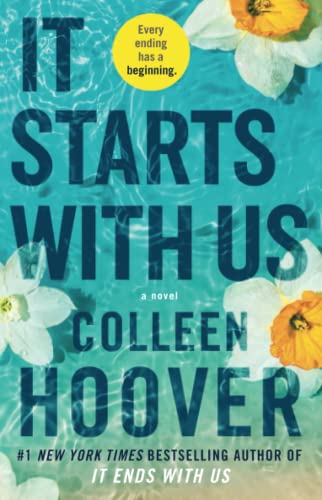
It Starts with Us by Colleen Hoover is a gripping tale about second chances at love and coping with past mistakes. The story follows Lily as she tries to navigate her rekindled romance with her first love, Atlas, while dealing with her ex-husband, Ryle, who is still a significant part of her life due to co-parenting their daughter.
The book delves deep into the perspectives of Lily and Atlas, exposing their past and current fears, challenges, and emotions. As the story unfolds, readers see the characters grow and change, learning to confront their fears, take risks, and fight for what they want.
Despite the challenges that come with their relationship, Lily and Atlas refuse to give up. They delve into their past and present fears and challenges, trying to find a way to make their relationship work. As they confront their inner demons, they learn to take risks, communicate openly, and fight for what they want.
The book is narrated from the perspectives of both Lily and Atlas, giving readers a deeper insight into their characters, emotions, and motivations. The author masterfully weaves the past and the present, exploring the characters’ backstories and how they impact their current decisions.
What sets this book apart from others is the way it tackles various sensitive issues such as domestic violence, mental health, and forgiveness. The author delivers powerful messages through the characters’ experiences, making the book a deeply emotional and thought-provoking read.
In summary, It Starts with Us is an unforgettable journey of second chances, love, and self-discovery. It is a must-read for anyone who enjoys complex characters, profound emotions, and a deeply engaging storyline. Colleen Hoover has once again proven that she is a master of storytelling, delivering a rich and memorable reading experience.
Key Takeaways from It Starts with Us
Here are some interesting takeaways from It Starts with Us:
- Our past experiences shape us: The novel highlights how our past experiences can shape who we are and how we interact with others. Lily’s traumatic childhood experiences affect her ability to trust and form intimate relationships.
- Through her story, readers come to understand the power of understanding and forgiving our pasts.Love takes work: It Starts with Us emphasizes the importance of communication and hard work in relationships. Lily and Atlas are forced to confront their own insecurities, learn to trust each other, and open up in order for their relationship to survive.
- Forgiveness is a powerful tool: The novel explores the idea of forgiveness and how it can help individuals move on from past hurts and heal. Forgiveness is not easy, but it can be a powerful tool for personal growth and healing.
- Love is not always enough: The novel challenges the idea that love conquers all. While love is important, it is not always enough to overcome deep-seated issues or to sustain a healthy relationship.
Quotes from It Starts with Us
Here are few interesting quotes from It Starts with Us:
“I can draw a seedling with two tiny branches. Yours and mine. We’ll be on our own brand-new, tiny family tree—one that starts with us.”
“It is my wish for you to be my fish”
“I’m so happy you’re happy. That’s all I’ve ever wanted for you. But I will say, nothing beats knowing I’m the one you get to be happy with now.”
“She’s my person, and I am hers, and that’s something I’ve known since the first week we met.”
“I prefer honesty over loyalty any day, because with honesty comes loyalty.”
“I may not be perfect, but I don’t deserve to fear for my life every time I make a mistake.”
“My loyalty is to the people who bring positivity into my life. My loyalty is to the people who want to build me up and see me happy. Those are the people I’m going to make decisions about my life for.”
“I was jealous of anyone who had ever loved something enough to experience losing it.”
“I want him to feel young for as long as he can. I want him to enjoy his time with me. I want him to know what love is long before I did.”
“Don’t think about where we used to be, just think about where we are.”
“I mean, it was the lowest point of my life, sure. But my memories with you from back then are still some of my favorites.”
“Now I actually like my life. I’m proud of what I’ve accomplished. I have absolutely no desire to allow anyone from my past to come in and threaten that.”
I hope you find It Starts with Us summary inspiring and helpful!
Bottom line
As you close the last chapter of “It Ends With Us,” you’re left with an emotional collage—moments of stark pain juxtaposed with beautiful bursts of joy and self-discovery. Colleen Hoover masterfully navigates the grey areas of love and life, showing us that sometimes the most courageous act is to put oneself first.
This book doesn’t just take you on a journey through the lives of its characters; it sparks an internal dialogue about the complexities of love, the sacrifices we make, and the limits of human tolerance. Unlike many romances that offer a neatly-wrapped “happily ever after,” “It Ends With Us” gives us something far more valuable: a raw, unflinching look at the choices we make and the paths we walk. It forces us to reckon with the difficult questions we often avoid, making the story stick with us long after the final sentence.