



In today’s post, we delve into the captivating world of “It Ends with Us” by Colleen Hoover, a novel that has garnered both critical acclaim and a passionate reader following. This poignant story intricately weaves themes of love, resilience, and the complexity of human relationships, leaving an indelible impact on its audience.
We’ll start by exploring an extended summary of the novel, providing a window into its compelling narrative and emotional depth. Following this, we’ll examine the intricacies of the key characters who bring this story to life with their complex layers and profound development.
To further enrich our understanding, we’ll also dive into thought-provoking book club questions designed to stimulate engaging discussions around this impactful narrative. For those interested in the novel’s most striking lines, I invite you to check out my other post titled “Best ‘It Ends with Us’ Quotes,” where I share some of the most memorable excerpts from the book.
Related: Colleen Hoover Hopeless Series Summary
It Ends with Us Summary
“It Ends with Us” by Colleen Hoover, is a novel that dives into the complexities of love, resilience, and survival. The story is centered around Lily Bloom, a character whose journey is both inspiring and heart-wrenching.
Growing up in a small town, Lily’s childhood was far from ideal, marked by challenges that she bravely faced. She’s a testament to determination, having worked tirelessly to build a life she can be proud of. Her move to Boston and the establishment of her own business are milestones of her hard-won independence and ambition.
The narrative takes a turn when Lily meets Ryle Kincaid, a neurosurgeon who’s not just incredibly attractive but also complex and multi-dimensional. Ryle is a mix of assertiveness and sensitivity, brilliance and arrogance, with a vulnerability that particularly emerges around Lily. Despite his insistence on staying away from relationships, Lily becomes an exception, sparking a passionate romance.
However, Ryle’s aversion to relationships and his mysterious past raise questions for Lily. As their relationship progresses, these questions become more pressing, interweaving with Lily’s own reflections on love and commitment.
The story gains further depth with the re-entry of Atlas Corrigan, Lily’s first love. Atlas is a powerful reminder of her past, embodying both the innocence of first love and the pain of moving on. His reappearance poses a significant threat to Lily’s relationship with Ryle, bringing past and present into a collision course.
Indeed, “It Ends with Us” is a poignant exploration of the complexities of human emotions and relationships. The novel delves into themes of abuse, resilience, and the difficult choices one must make in the pursuit of happiness and self-respect. Colleen Hoover’s portrayal of Lily is both raw and real, making the character’s struggles and triumphs deeply relatable.
It Ends with Us Characters
In “It Ends with Us” by Colleen Hoover, the characters are thoughtfully crafted, each bringing a unique depth to the story. Here’s a look at the key characters:
- Lily Bloom: The protagonist of the novel, Lily is a resilient and determined young woman. Her journey from a troubled childhood to establishing her own business in Boston showcases her strength and perseverance. Lily’s character is marked by her capacity for love, her resilience in the face of challenges, and her journey towards self-discovery and empowerment.
- Ryle Kincaid: A neurosurgeon who becomes romantically involved with Lily, Ryle is charming, intelligent, and successful. However, he is also complex, with a reluctance to commit to relationships. His interactions with Lily reveal layers of sensitivity and vulnerability, as well as some troubling behaviors that add complexity to his character.
- Atlas Corrigan: Lily’s first love and a significant figure from her past, Atlas is deeply intertwined with her early life experiences. He is portrayed as a kindred spirit and a protector for Lily during her more vulnerable times. His reappearance in Lily’s life brings both nostalgia and turmoil, challenging her current relationships and sense of self.
- Alyssa: A friend of Lily’s and the sister of Ryle. Alyssa plays a key role in Lily’s social life and acts as a bridge between Lily and Ryle. Her character adds a layer to the social dynamics within the story.
- Marshall: Alyssa’s husband, who adds to the novel’s social dynamics. His character is involved in the lives of both Lily and Ryle, offering a different perspective on their relationship.
- Lily’s Mother: Her character provides a backdrop to Lily’s understanding of relationships and love. The dynamics between Lily and her mother add an important dimension to the story, especially in understanding Lily’s motivations and the choices she makes.
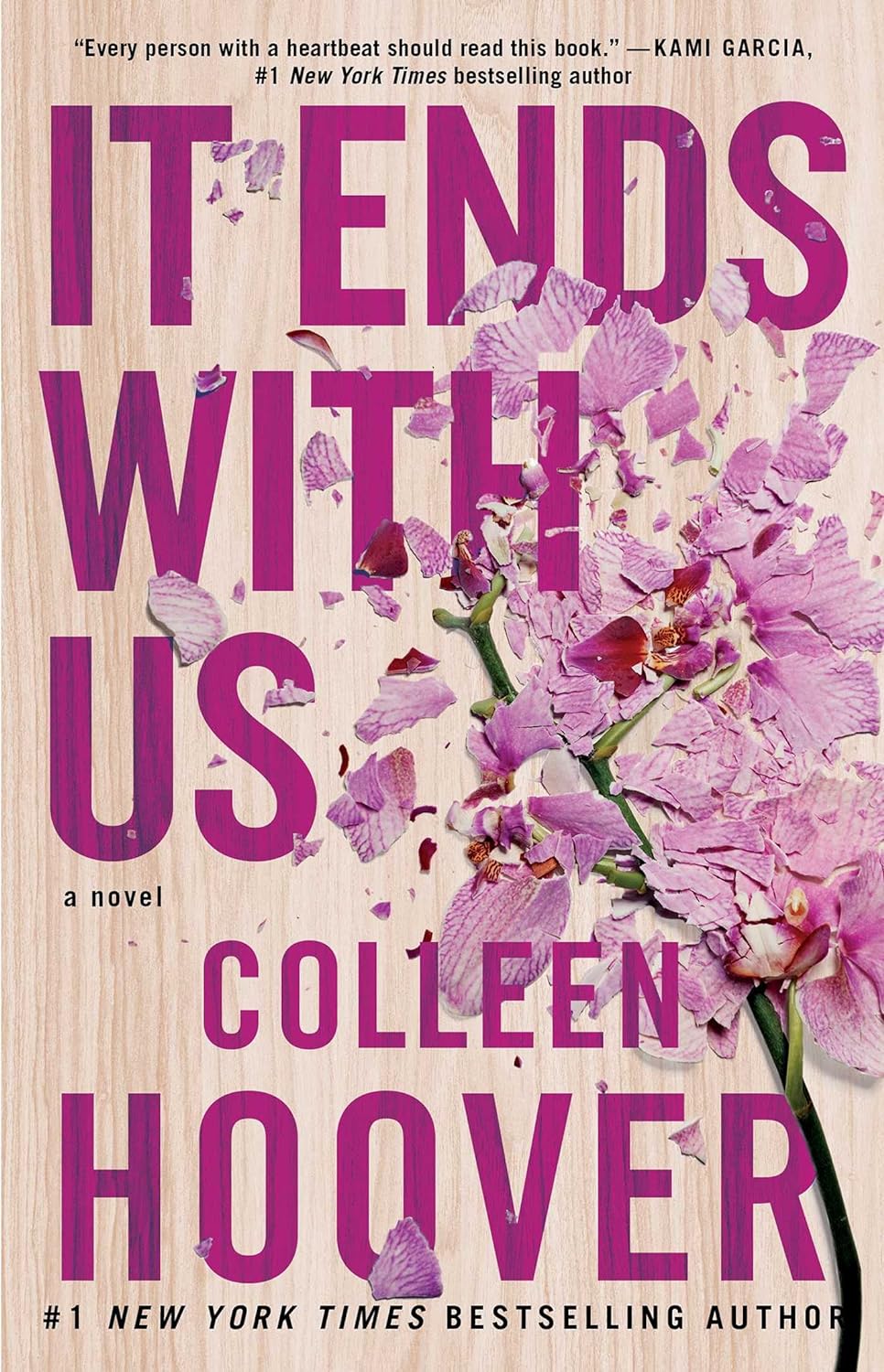
Photo Amazon
It Ends with Us Book Club Questions
Here are some thought-provoking questions that can help guide your discussion:
- Character Analysis: How do you perceive Lily Bloom’s character development throughout the novel? What aspects of her journey did you find most compelling or relatable?
- Theme of Resilience: In what ways does the novel explore the theme of resilience, especially in the context of personal relationships and overcoming past trauma?
- Ryle’s Complexity: Ryle Kincaid is a character with many layers. How did your perception of him change throughout the story? What are your thoughts on how Colleen Hoover portrayed his character?
- First Love vs True Love: How does the novel contrast Lily’s relationship with Atlas Corrigan to her relationship with Ryle Kincaid? What does each relationship reveal about her as a character?
- Role of the Past: How does Lily’s past influence her decisions in the present? Discuss the impact of her childhood experiences on her adult life.
- Discussion on Abuse: “It Ends with Us” tackles the difficult subject of abuse. How does the novel handle this sensitive topic? Did it change or reinforce your understanding of why people might stay in abusive relationships?
- Moral Dilemmas: What moral dilemmas does the book present? Were there moments when you disagreed with the decisions made by the characters?
- The Title’s Significance: In what ways is the title, “It Ends with Us,” significant to the story’s themes and character arcs?
- Supporting Characters: Discuss the roles of supporting characters like Alyssa, Marshall, and Lily’s mother. How do they contribute to the main narrative and themes of the book?
- Personal Reflections: Were there any moments in the book that particularly moved you or made you reflect on your own experiences or beliefs?
- Author’s Approach: Colleen Hoover is known for her emotional storytelling. How do you think her writing style contributed to the impact of the story?
- Potential for Adaptation: With the novel being adapted into a movie, what are your expectations or concerns about how the story will be translated to the screen?
Final thoughts
Through our extended summary, we’ve seen the depth and nuance of Hoover’s narrative. Our character analysis allowed us to step into the shoes of Lily Bloom and others, understanding their struggles and triumphs. The book club questions, I hope, will serve as a catalyst for deeper reflection and discussion, whether you’re engaging with fellow readers or pondering the story’s themes solo.
This novel, with its raw depiction of love and resilience, invites us to confront the complexities of life and relationships. For a further emotional connection with the book, don’t forget to explore the “Best ‘It Ends with Us’ Quotes” in my other post, where the power of Hoover’s words continues to resonate.
