

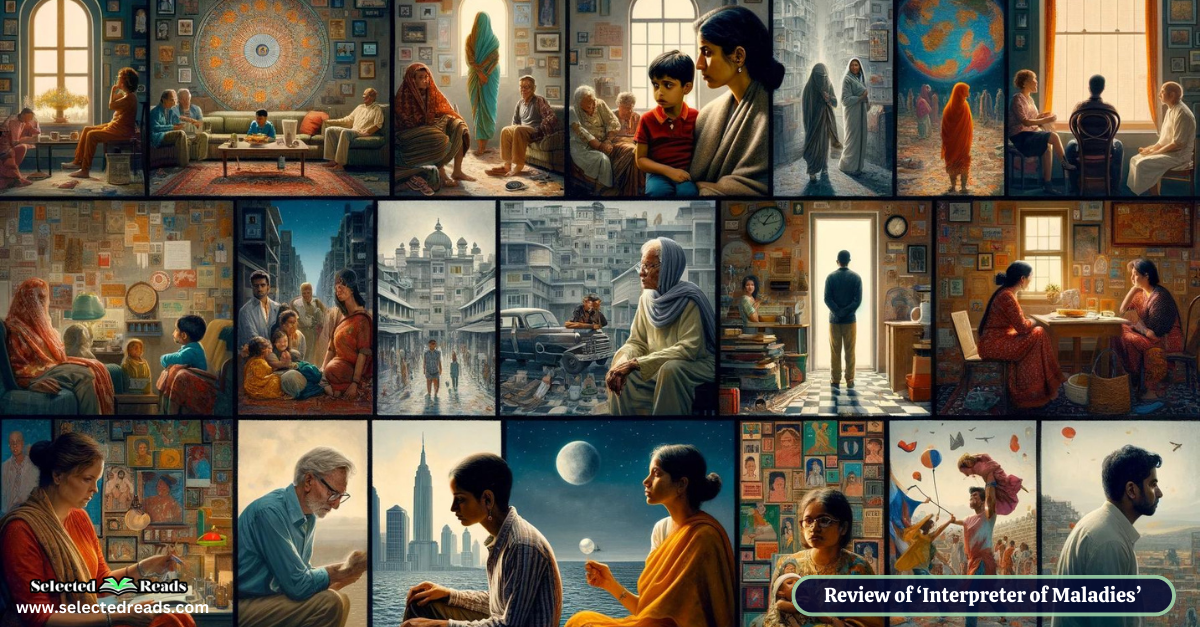
“Interpreter of Maladies” by Jhumpa Lahiri is the focus of our post today, a collection that belongs to the realms of literary fiction and short stories. This Pulitzer Prize-winning work is a profound exploration of the emotional journeys of characters bridging the gaps between cultures, nations, and generations.
The purpose of this post is to familiarize you with Lahiri’s stunning debut collection without spoiling the intricate beauty of her narratives. My discussion will proceed as follows: First, I’ll provide a summary of the stories within the collection. Next, I’ll delve into the characters who populate these stories, each a vivid portrayal of longing, identity, and displacement. To wrap up, I’ll offer some thought-provoking book club questions designed to deepen your understanding and appreciation of Lahiri’s work, and perhaps, prompt a reflection on your own experiences of crossing cultural divides.
Related: Cutting for Stone Summary
Interpreter of Maladies Summary
“Interpreter of Maladies” by Jhumpa Lahiri is a collection of nine short stories that delve into the lives of Indians and Indian Americans caught between the cultural expectations of their heritage and the realities of their lives in a new world. The stories explore themes of identity, displacement, and the quest for connection in the context of cross-cultural experiences. Here is a brief overview of each story in the collection:
- A Temporary Matter: A young Indian-American couple, Shoba and Shukumar, are forced to confront their grief and estrangement from each other after a blackout in their city requires them to spend their evenings in darkness, revealing secrets that test their relationship.
- When Mr. Pirzada Came to Dine: Set against the backdrop of the 1971 Pakistan-Bangladesh conflict, a young girl in America grows fond of Mr. Pirzada, a visiting scholar from Dacca, and slowly comes to understand the complexities of national identity and the impact of political turmoil on personal lives.
- Interpreter of Maladies: An Indian-American family on vacation in India hires a tour guide to visit tourist sites, but their journey takes an unexpected turn when the wife, Mrs. Das, shares a deep secret with the guide, revealing her own sense of isolation and longing for connection.
- A Real Durwan: Boori Ma, a refugee and the doorman of a Calcutta apartment building, loses her position and home when she is falsely accused of theft, highlighting the precariousness of her existence and the fragility of social bonds.
- Sexy: Miranda, an American woman, enters into an affair with a married Indian man, only to confront her own understanding of love and desire when she befriends the young son of another Indian family, who innocently exposes the complexities of adult relationships.
- Mrs. Sen’s: An 11-year-old boy, Eliot, forms a bond with his Indian babysitter, Mrs. Sen, who struggles to adapt to her new life in America. Their relationship highlights the cultural and emotional gaps between their worlds.
- This Blessed House: A newlywed Indian-American couple, Twinkle and Sanjeev, discover Christian paraphernalia hidden in their home, causing tension between them as they navigate their cultural identities and differing attitudes towards their find.
- The Treatment of Bibi Haldar: Bibi Haldar, a young woman suffering from a mysterious illness, is ostracized by her community. Her desperate quest for a cure and normalcy reflects the societal pressures on women and the stigma of illness.
- The Third and Final Continent: A young Indian immigrant in America navigates his new life while maintaining a connection to his traditional past. His reflections on love, marriage, and belonging culminate in a poignant understanding of his journey across continents and cultures.
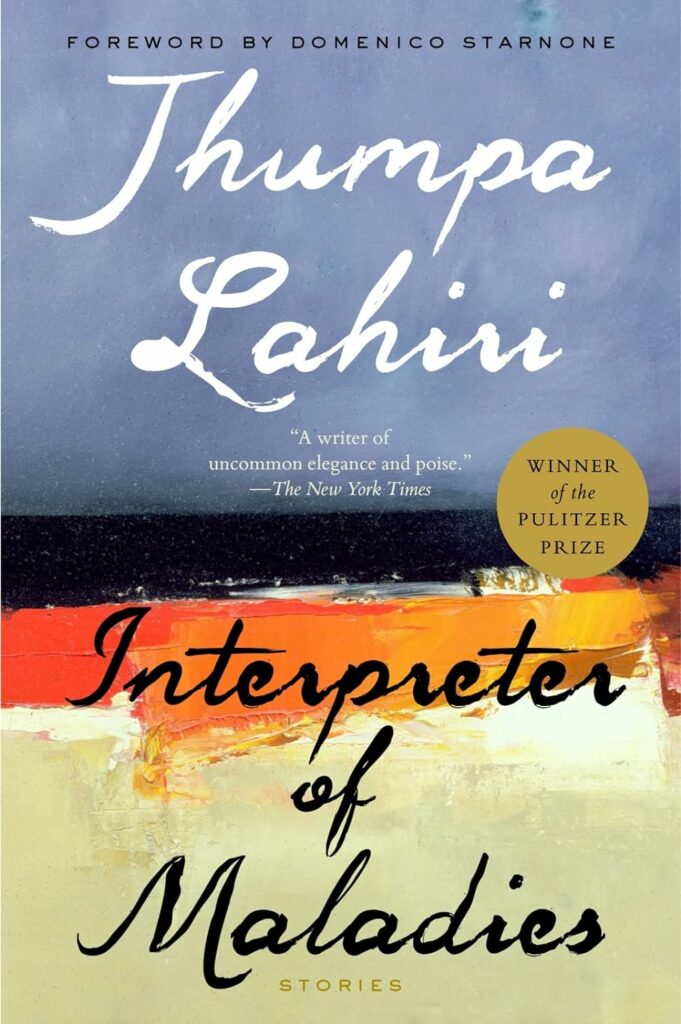
Photo: Amazon
Interpreter of Maladies Book Club Questions
Here are some questions to guide your book club’s conversation:
- Themes of Communication and Miscommunication: Many stories in “Interpreter of Maladies” deal with the themes of communication and miscommunication, both verbal and non-verbal. How do these themes play out across different stories? Can you identify moments where communication significantly alters the course of characters’ lives?
- Cultural Identity and Displacement: The characters in Lahiri’s stories often find themselves caught between two cultures. Discuss how the experience of displacement affects their identities and relationships. How do characters navigate the complexities of belonging to multiple cultures?
- Role of Setting: Lahiri meticulously describes settings, from Calcutta to New England. How does the setting influence the characters and their stories? Discuss the importance of place in shaping the narrative and characters’ experiences.
- Character Development: Choose a character that particularly resonated with you. Discuss their journey and development throughout the story. What do you think Lahiri is trying to convey through this character’s experiences?
- The Title Story “Interpreter of Maladies”: In the title story, an interpreter guides an American family through India and becomes privy to personal revelations. How does this story encapsulate the themes of the entire collection? Discuss the role of the interpreter as both a literal and metaphorical figure.
- Marriage and Relationships: Many stories explore the nuances of marriage and relationships, often highlighting the gaps between individuals’ expectations and reality. Discuss how Lahiri portrays marriage and what these portrayals reveal about her characters’ searches for connection and understanding.
- The Role of Secrets: Secrets play a significant role in several stories. How do secrets affect the characters and their relationships? Discuss the impact of revealing or discovering secrets in the narratives.
- Generational Differences: The collection often explores the differences between generations, particularly in the context of immigrant families. How do generational perspectives on culture, tradition, and modernity conflict or converge in these stories?
- Lahiri’s Writing Style: Discuss Lahiri’s writing style, particularly her use of detail, in conveying the emotional landscapes of her characters. How does her prose contribute to the overall impact of the stories?
- Personal Reflection: Was there a particular story that struck a personal chord with you? Share why and discuss the universal themes in Lahiri’s work that allow readers to connect with the stories on a personal level.
Related: On Earth We’re Briefly Gorgeous Summary
Final thoughts
To conclude, I hope that you have found this short review of “Interpreter of Maladies” by Jhumpa Lahiri interesting and engaging. If you have not already delved into the pages of this Pulitzer Prize-winning masterpiece, I highly recommend that you do so. Lahiri’s nuanced storytelling and her ability to capture the essence of the human experience across cultural divides are both enlightening and deeply moving.