


The Autobiography of Benjamin Franklin is a well-known and influential record of the life of one of America’s most celebrated founding fathers. Written by Walter Isaacson, the work is divided into four parts, each reflecting different periods of his life. Despite a rocky publication history, Franklin’s autobiography has become a classic example of the genre.
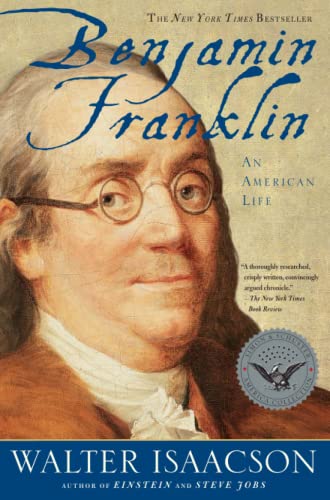
Part One of the autobiography covers Franklin’s early life, his experience as an apprentice in his older brother’s printing shop, and his eventual decision to leave Boston for Philadelphia. Part Two follows Franklin’s early career in Philadelphia, including his founding of the Junto club and the beginning of his newspaper, The Pennsylvania Gazette. Part Three covers Franklin’s diplomatic missions in England and his eventual return to America to help draft the Declaration of Independence.
In Part Four, Franklin focuses on his later life, including his scientific experiments with electricity and his advocacy for the abolition of slavery. The narrative is characterized by Franklin’s engaging prose style and his reflections on the lessons he learned throughout his life.
Throughout his autobiography, Franklin emphasizes the importance of self-improvement and hard work, citing his own diligent pursuit of knowledge and success as examples for others to follow. He also reflects on his personal shortcomings and failures, offering them as cautionary tales for his readers.
Overall, Benjamin Franklin’s Autobiography stands as a testament to one man’s extraordinary life and accomplishments, as well as a guidepost for future generations seeking to achieve their own success through hard work and perseverance.
Takeaways from Benjamin Franklin Autobiography
Here are some of the key takeaways from Benjamin Franklin’s Autobiography:
1. Hard work and dedication will help you achieve success – Franklin puts a lot of emphasis on the importance of hard work, noting that it was something he always strived for in his own life.
2. Failure is part of life – Despite his many successes, Franklin also reflects on his personal shortcomings and mistakes as well as cautionary tales for readers.
3. Self-improvement is essential to personal growth – From learning to write better to mastering scientific experiments with electricity, Franklin consistently sought out knowledge and growth in order to improve himself.
4. Don’t be afraid to try something new – Throughout his autobiography, Franklin emphasizes how important it is to take risks and try new things, especially if those activities are outside your comfort zone.
5. Live in the present – Franklin often reflected on his own mortality and the brevity of life, which caused him to appreciate every moment and make the most of each day.
6. Appreciate the simple things in life – Despite being a renowned statesman, inventor, and diplomat, Franklin was also able to find joy in everyday activities like reading books or playing chess.
7. Give back to society – As a Founding Father, Franklin devoted his life to public service and making the world a better place. He encourages others to do the same by giving back to their communities.
These are just some of the lessons that can be learned from Benjamin Franklin’s Autobiography. He is an inspiration for all people who strive for success in their lives, not just through hard work but also self-improvement, risk taking, and appreciation of life’s simple pleasures.
Here are few of the most famous Benjamin Franklin quotes:
“An investment in knowledge pays the best interest.” – Benjamin Franklin
“It is never too late to be wise.” – Benjamin Franklin
“Energy and persistence conquer all things.” – Benjamin Franklin
“Keep your eyes wide open before marriage, half shut afterwards.” – Benjamin Franklin
“Do not anticipate trouble, or worry about what may never happen. Keep in the sunlight.” – Benjamin Franklin
“Honesty is the best policy.” – Benjamin Franklin
“If you would not be forgotten as soon as you are dead, either write something worth reading or do something worth writing.” – Benjamin Franklin
“Many people die at 25 and aren’t buried until they are 75.” – Benjamin Franklin
I hope you find this Benjamin Franklin Autobiography summary helpful!
